| Uploader: | Vladik |
| Date Added: | 21.02.2016 |
| File Size: | 52.58 Mb |
| Operating Systems: | Windows NT/2000/XP/2003/2003/7/8/10 MacOS 10/X |
| Downloads: | 37309 |
| Price: | Free* [*Free Regsitration Required] |

Why We Sleep by Matthew Walker - Summary & Notes
Below are some websites for downloading free [�� PDF] SUMMARY: Why We Sleep: Unlocking The Power of Sleep and Dreams: By Matthew Walker (Sleep Hygiene & D books where you can acquire as much knowledge as you want. If you want to annotate or comment while reading on PC, you could click the download button below to read and add bookmarks to. Why We Sleep: The New Science of Sleep and Dreams by Matthew Walker. 'Astonishing an amazing book absolutely chocker full of things that we need to know' Chris Evans 'Matthew Walker is probably one of the most influential people on the planet' Evening Standard THE #1 SUNDAY TIMES BESTSELLER TLS, OBSERVER, SUNDAY TIMES, FT, GUARDIAN, DAILY MAIL AND EVENING . Download Why We Sleep by Matthew Walker PDF eBook free. Why We Sleep is the medical and psychology book in which the author reveals the secrets and benefits of sleep. Description of Why We Sleep by Matthew Walker PDF.
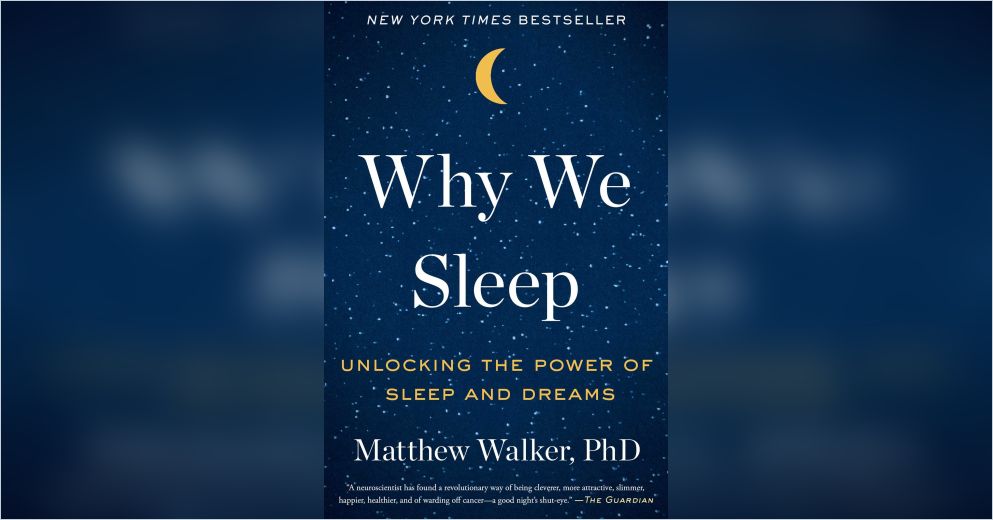
Why we sleep matthew walker pdf free download
I am becoming convinced aided by this book that being able to sleep well is a huge advantage in life. This book is likely to convince you of the same.
It is a summary of scientific research on sleep to date, providing insight on how sleep affects cognitive and physical performance in both the short and long term, and what you can do improve your own sleep which often involves avoiding things causing bad sleep. Want to get my latest book notes? Subscribe to my newsletter to get one email a week with new book notes, blog posts, and favorite articles. Summary The most comprehensive and compelling book on sleep I have ever read.
Recommended for everyone, why we sleep matthew walker pdf free download, as sleep affects us all. The shorter your sleep, the shorter your life span. Sleep is the most effective thing we can do to reset our brain and body health each day.
Chapter 2 - Caffeine, Jet Lag, and Melatonin Your circadian rhythm is one of two factors determining wake and sleep. Melatonin helps regulate the timing of when sleep occurs by signalling darkness throughout the organism, but has little influence on the generation of sleep itself.
Sleep pressure, caused by a buildup of the chemical adenosine in your brain, is the second factor affecting sleepiness. Caffeine works by blocking the receptors that adenosine affects after about 30 minutes.
Some people process caffeine faster than others, and we get less efficient as we age. Do you find yourself re-reading things? Can you function optimally before noon without caffeine? Chapter 3 - Defining and Generating Sleep When it comes to information processing, think of the wake state principally as reception experiencing and constantly learning the world around youNREM sleep as reflection storing and strengthening those raw ingredients of new facts and skillsand REM sleep as integration interconnecting these raw ingredients with each other, with all past experiences, and, in doing so, building an ever more accurate model of how the world works, including innovative insights and problem-solving abilities.
Why did evolution decide to outlaw muscle activity during REM sleep? Because by eliminating muscle activity you are prevented from acting out your dream experience, why we sleep matthew walker pdf free download. Chapter 4 - Ape Beds, Dinosaurs, and Napping with Half a Brain That humans and all other species can never sleep back that which we have previously lost is one of the most important take-homes of this book, the saddening consequences of which I will describe in chapters 7 and 8.
How Should We Sleep? Throughout developed nations, most adults currently sleep in a monophasic pattern—that is, we why we sleep matthew walker pdf free download to take a long, single bout of slumber at night, the average duration of which is now less than seven hours.
Visit cultures that are untouched by electricity and you often see something rather different. Hunter-gatherer tribes, such as the Gabra in northern Kenya or the San people in the Kalahari Desert, whose way of life has changed little over the past thousands of years, sleep in a biphasic pattern. Both these groups take a similarly longer sleep period at night seven to eight hours of time in bed, achieving about seven hours of sleepfollowed by a thirty- to sixty-minute nap in the afternoon.
Apparent from this remarkable study is this fact: when we are cleaved from the innate practice of biphasic sleep, our lives are shortened. It is perhaps unsurprising that in the small enclaves of Greece where siestas still remain intact, such as the island of Ikaria, men are nearly four times as likely to reach the age of ninety as American males.
REM Sleep REM sleep exquisitely recalibrates and fine-tunes the emotional circuits of the human brain discussed in detail in part 3 of the book. Second, and more critical, if you multiply these individual benefits within and across groups and tribes, all of which are experiencing an ever-increasing intensity and richness of REM sleep over millennia, we can start to see how this nightly REM-sleep recalibration of our emotional brains could have scaled rapidly and exponentially.
REM sleep fuels creativity. Childhood Sleep The changes in deep NREM sleep always precede the cognitive and developmental milestones within the brain by several weeks or months, implying a direction of influence: deep sleep may be a driving force of brain maturation, not the other way around. We are still learning more about the role of sleep in development. However, why we sleep matthew walker pdf free download, a strong case can already be made for defending sleep time in why we sleep matthew walker pdf free download adolescent youth, why we sleep matthew walker pdf free download, rather than denigrating sleep as a sign of laziness.
Sleep in Midlife and Old Age That older adults simply need less sleep is a myth. Older adults appear to need just as much sleep as they do in midlife, but are simply less able to generate that still necessary sleep. As you enter your fourth decade of life, there is a palpable reduction in the electrical quantity and quality of that deep NREM sleep.
The second hallmark of altered sleep as we age, and one that older adults are more conscious of, is fragmentation. The older we get, the more frequently we wake up throughout the night. Due to sleep fragmentation, older individuals will suffer a reduction in sleep efficiency, defined as the percent of time you were asleep while in bed. As healthy teenagers, we enjoyed a sleep efficiency of about 95 percent.
As a reference anchor, most sleep doctors consider good-quality sleep to involve a sleep efficiency of 90 percent or above. Any individual, no matter what age, will exhibit physical ailments, mental health instability, reduced alertness, and impaired memory if their sleep is chronically disrupted. The third sleep change with advanced age is that of circadian timing. In sharp contrast to adolescents, seniors commonly experience a regression in sleep timing, leading to earlier and earlier bedtimes.
Part 2 - Why Should You Sleep? Chapter 6 - Your Mother and Shakespeare Knew The Benefits of Sleep for the Brain Of the many advantages conferred by sleep on the brain, that of memory is especially impressive, and particularly well understood. Sleep has proven itself time and again as a memory aid: both before learning, to prepare your brain for initially making new memories, and after learning, to cement those memories and prevent forgetting.
Sleep for Other Types of Memory My final discovery, why we sleep matthew walker pdf free download, in what spanned almost a decade of research, why we sleep matthew walker pdf free download, identified the type of sleep responsible for the overnight motor-skill enhancement, carrying with it societal and medical lessons. The increases in speed and accuracy, underpinned by efficient automaticity, were directly related to the amount of stage 2 NREM, especially in the last two hours of an eight-hour night of sleep e.
Obtain anything less than eight hours of sleep a night, and especially less than six hours a night, and the following happens: time to physical exhaustion drops by 10 to 30 percent, and aerobic output is significantly reduced. Similar impairments are observed in limb extension force and vertical jump height, together with decreases in peak and sustained muscle strength.
Add to this marked impairments in cardiovascular, why we sleep matthew walker pdf free download, metabolic, and respiratory capabilities that hamper an underslept body, including faster rates of lactic acid buildup, reductions in blood oxygen saturation, and converse increases in blood carbon dioxide, due in part to a reduction in the amount of air that the lungs can expire.
Even the ability of the body to cool itself during physical exertion through sweating - a critical part of peak performance - is impaired by sleep loss. Post-performance sleep accelerates physical recovery from common inflammation, stimulates muscle repair, and helps restock cellular energy in the form of glucose and glycogen.
Sleep for Creativity A final benefit of sleep for memory is arguably the most remarkable of all: creativity. Chapter 7 - Too Extreme why we sleep matthew walker pdf free download the Guinness Book of World Records In the following two chapters, we will learn precisely why and how sleep loss inflicts such devastating effects on the brain, linking it to numerous neurological and psychiatric conditions e. No facet of the human body is spared the crippling, noxious harm of sleep loss.
Pay Attention One brain function that buckles under even the smallest dose of sleep deprivation is concentration, why we sleep matthew walker pdf free download. The deadly societal consequences of these concentration failures play out most obviously and fatally in the form of drowsy driving. Every hour, someone dies in a traffic accident in the US due to a fatigue-related error. Not only this, but participants who are sleep deprived consistently underestimate the degree to which their performance is reduced.
Humans need more than seven hours of sleep each night to maintain cognitive performance. After ten days of just seven hours of sleep, the brain is as dysfunctional as it would be after going without sleep for twenty-four hours. Three full nights of recovery sleep i.
Finally, the human mind cannot accurately sense how sleep-deprived it is when sleep-deprived. There are many things that I hope readers take away from this book. This is one of the most important: if you are drowsy while driving, please, please stop.
It is lethal. Can Naps Help? No matter what you may have heard or read in the popular media, there is no scientific evidence we have suggesting that a drug, a device, or any amount of psychological willpower can replace sleep.
Power naps may momentarily increase basic concentration under conditions of sleep deprivation, as can caffeine up to a certain dose. Neither naps nor caffeine can salvage more complex functions of the brain, including learning, memory, emotional stability, complex reasoning, or decision-making.
We have, however, discovered a very rare collection of individuals who appear to be able to survive on six hours of sleep, and show minimal impairment—a sleepless elite, as it were. Give them hours and hours of sleep opportunity in the laboratory, with no alarms or wake-up calls, and still they naturally sleep this short amount and no more. Part of the explanation appears to lie in their genetics, specifically a sub-variant of a gene called BHLHE Emotional Irrationality Many emotional and psychiatric problems can occur under sleep deprivation.
Conversely, treating some of these issues with sleep has shown success. Tired and Forgetful? Sleep represents a new candidate for hope on all three of these fronts: diagnosis, prevention, and therapeutics. Chapter 8 - Cancer, Heart Attacks, and a Shorter Life Sleep Deprivation and the Body Widening the lens of focus, there are more than twenty large-scale epidemiological studies that have tracked millions of people over many decades, all of which report the same clear relationship: the shorter your sleep, the shorter your life.
The leading causes of disease and death in developed nations—diseases that are crippling health-care systems, such as heart disease, obesity, dementia, diabetes, and cancer—all have recognized causal links to a lack of sleep.
Sleep Loss and the Cardiovascular System In the Northern Hemisphere, the switch to daylight savings time in March results in most people losing an hour of sleep opportunity. Should you tabulate millions of daily hospital records, as researchers have done, why we sleep matthew walker pdf free download, you discover that this seemingly trivial sleep reduction comes with a frightening spike in heart attacks the following day. Impressively, it works both ways. In the autumn within the Northern Hemisphere, when the clocks move forward and we why we sleep matthew walker pdf free download an hour of sleep opportunity time, rates of heart attacks plummet the day after.
A similar rise-and-fall relationship can be seen with the number of traffic accidents, proving that the brain, by way of attention lapses and microsleeps, is just as sensitive as the heart to very small perturbations of sleep. Weight Gain and Obesity The upshot of all this work can be summarized as follows: short sleep of the type that many adults in first-world countries commonly and routinely report will increase hunger and appetite, compromise impulse control within the brain, increase food consumption especially of high-calorie foodsdecrease feelings of food satisfaction after eating, and prevent effective weight loss when dieting.
Sleep Loss and the Reproductive System Take a group of lean, healthy young males in their mid-twenties and limit them to five hours of sleep for one week, as a research group did at the University of Chicago. Sample the hormone levels circulating in the blood of these tired participants and you will find a marked why we sleep matthew walker pdf free download in testosterone relative to their own baseline levels of testosterone when fully rested.
The size of the hormonal blunting effect is so large that it effectively ages a man by ten to fifteen years in terms of testosterone virility. Sleep Loss and the Immune System Sleep deprivation vastly increases your likelihood of infection, and reduces your response to flu vaccine. Chapter 10 - Dreaming as Overnight Therapy Dreaming - The Soothing Balm In fact, REM sleep is the only time during the twenty-four-hour period when your brain is completely devoid of this anxiety-triggering molecule.
Noradrenaline, also known as norepinephrine, is the brain equivalent to a body chemical you already know and have felt the effects of: adrenaline epinephrine.
Dreaming to Decode Waking Experiences There are regions of your brain whose job it is to read and decode the value and meaning of emotional why we sleep matthew walker pdf free download, especially faces.
And it is that very same essential set of brain regions, or network, why we sleep matthew walker pdf free download, that REM sleep recalibrates at night.
The outside world had become a more threatening and aversive place when the brain lacked REM sleep—untruthfully so. But it is REM sleep that offers the masterful and complementary benefit of fusing and blending those elemental ingredients together, in abstract and highly novel ways.
Part 4 - From Sleeping Pills to Society Transformed Chapter 12 - Things That Go Bump in the Night Sleep Disorders and Death Caused by No Sleep Without belaboring the point, insomnia is one of the most pressing and prevalent medical issues facing modern society, yet few speak of it this way, recognize the burden, or feel there is a need to act. Beyond longer commute times and sleep procrastination caused by late-evening television and digital entertainment—both of which are not unimportant in their top-and-tail snipping of our sleep time and that of our children—five key factors have powerfully changed how much and how well we sleep: 1 constant electric light as well as LED light, 2 regularized temperature, 3 caffeine discussed in chapter 24 alcohol, and 5 a legacy of punching time cards.
How To Improve Your Sleep - Matthew Walker
, time: 8:25Why we sleep matthew walker pdf free download

Below are some websites for downloading free [�� PDF] SUMMARY: Why We Sleep: Unlocking The Power of Sleep and Dreams: By Matthew Walker (Sleep Hygiene & D books where you can acquire as much knowledge as you want. If you want to annotate or comment while reading on PC, you could click the download button below to read and add bookmarks to. Listen Free to Why We Sleep: Unlocking the Power of Sleep and Dreams audiobook by Matthew Walker with a 30 Day Free Trial! Stream and download audiobooks to your computer, tablet and iOS and Android devices. Download Summary and Discussions of Why We Sleep: Unlocking the Power of Sleep and Dreams By Matthew Walker, PhD PDF book author, online PDF book editor Summary and Discussions of Why We Sleep: Unlocking the Power of Sleep and Dreams By Matthew Walker, PhD. Download and chatter books online, ePub / PDF online / Audible / Kindle is an easy way to See, books for heterogeneous. .

No comments:
Post a Comment